
Ghana’s Christian Leaders Defend Mission Schools’ Religious Identity Amid Hijab Ban Court Battle
Credit:
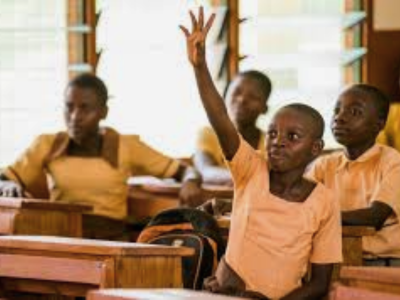
Ghana’s leading Christian bodies have rallied behind the country’s mission schools, insisting that state funding does not erase their faith-based identity as a Supreme Court case challenges Wesley Girls’ Senior High School’s ban on hijabs and other Muslim practices.
In a joint statement, the Catholic Bishops’ Conference and the Christian Council of Ghana argued that mission schools, many of which predate independence, were established by churches to provide education rooted in Christian values. They rejected claims that government support makes the schools fully public, stressing: “We also have rights.” The groups urged dialogue to balance religious freedoms with educational equity.
The statement followed a Supreme Court order directing Wesley Girls’ board, the Ghana Education Service, and the Attorney General to respond within 14 days to allegations of constitutional violations. The lawsuit, filed in December 2024 by lawyer Shafic Osman, argues that policies banning hijabs, fasting during Ramadan, and requiring chapel attendance breach constitutional protections of freedom of religion and thought. Osman seeks a declaration that the rules unlawfully compel students to follow Christian rites in a publicly funded institution.
Attorney General Dominic Ayine, in a November 24 filing, countered that Wesley Girls, founded in 1876 by the Methodist Church, retains the right to enforce standards aligned with its faith-based principles. He argued that government aid supports but does not strip away the school’s religious character.
Critics, however, see the rules as discriminatory. U.S.-based Ghanaian law professor Stephen Kwaku Asare (Kwaku Azar) contended that public schools cannot privilege one religion over others, warning that such policies undermine dignity for Muslim, traditionalist, and non-religious students. Civil society group Democracy Hub has been granted amicus curiae status to submit briefs, potentially widening the debate on secularism in education.
Education Minister Haruna Iddrisu reaffirmed the government’s commitment to constitutional protections for all students, aligning with international human rights norms. The case highlights Ghana’s delicate balancing act: preserving colonial-era mission school legacies—institutions that educate over 60% of secondary students—while fostering inclusivity in a nation where Christians and Muslims each make up about 30% of the population.
Proponents of reform argue for clearer national guidelines to prevent similar disputes, while defenders of mission schools warn that diluting their rules could erode the moral foundation on which they were built.



0 Comment(s)